

News
Only 26% Of Bauchi Infants Exclusively Breastfed – UNICEF


…Advocates ‘Zero Water Campaign’ to Improve Infant Survival in Bauchi
From Paul Orude Bauchi
The United Nations Children’s Fund (UNICEF) has raised concern over persistently low exclusive breastfeeding rates in Bauchi State, revealing that only 26 per cent of infants are exclusively breastfed for the first six months of life despite widespread awareness of its benefits.
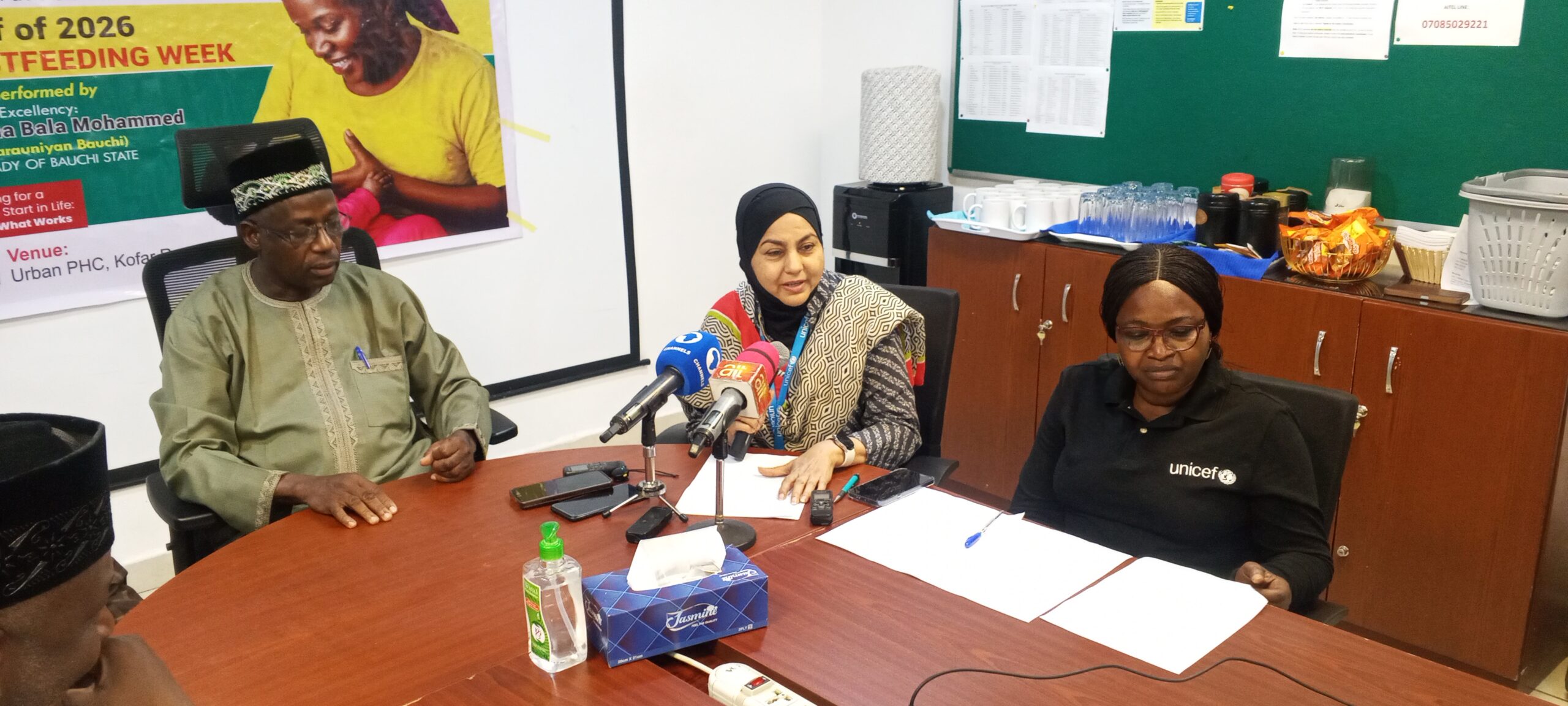
UNICEF Chief of Field Office, Bauchi, Dr. Nuzhat Rafique, who disclosed the statistics during the 2026 World Breastfeeding Week, said the figures show a major gap between knowledge and practice in child nutrition across the state.
Speaking at a media briefing held at the Emergency Operations Centre (EOC) Bauchi on Monday, Rafique also revealed that only 12 per cent of newborns in Bauchi are breastfed within the first hour of birth, a practice she described as critical for newborn survival and immunity.
“While more than nine out of every 10 mothers breastfeed their babies, the problem is that optimal breastfeeding practices remain very low,” Dr. Rafique said.
According to her, early initiation of breastfeeding and exclusive breastfeeding for six months are key determinants of child survival, yet many mothers still introduce water, honey and other substances within the first days of life.
“What makes breastfeeding optimal is not just continuing for two years but starting within the first hour of birth and ensuring that nothing, not even water, is given to the baby for the first six months,” she explained.
Dr Rafique warned that the introduction of other substances exposes infants to infections, increasing the risk of diarrhoea, respiratory diseases and malnutrition, which remain leading causes of child mortality.
“Breast milk is the baby’s first vaccine. When children are not exclusively breastfed, they become more vulnerable to infections and malnutrition, creating a cycle that contributes to preventable child deaths,” she said.
She further stressed that even in hot weather conditions, breast milk alone provides sufficient hydration for infants, dismissing the belief that babies need water in addition to breast milk.
Dr. Rafique called for a “Zero Water Campaign” to eliminate the practice of giving newborns water during the first six months of life, describing it as a major barrier to achieving optimal breastfeeding rates in the state.
The UNICEF official also highlighted the need for stronger support systems for nursing mothers, noting that breastfeeding should not be seen as the sole responsibility of women.
She urged husbands, families, employers, and community leaders to actively support breastfeeding mothers by creating enabling environments, including workplace crèches and breastfeeding-friendly public spaces.
“If households and communities support mothers properly, the next generation will be healthier. Breastfeeding is not just feeding a child; it is an investment in the country’s economic growth,” she said.
Dr. Rafique also cautioned against aggressive marketing of infant formula, warning that it often misleads parents into believing it is superior to breast milk.
“God’s breast milk is the best. Every child has the right to be breastfed, and every mother deserves the support to do it correctly,” she added.
Commending the state government, Dr. Rafique praised the approval of six months paid maternity leave for female civil servants, describing it as a major policy step that could improve exclusive breastfeeding rates if properly implemented.
“I congratulate the Bauchi State Government and everyone who contributed to the passage of the six-month maternity leave policy. It is a landmark achievement,” she said.
Also speaking, the Executive Secretary of the Bauchi State Primary Health Care Development Board, Dr. Rilwanu Mohammed, said UNICEF remains a key partner in improving maternal and child health outcomes in the state.
He noted that despite policy progress, awareness and behavioural change remain critical to improving exclusive breastfeeding rates.
“Even if you give mothers six months of maternity leave, some will still not exclusively breastfeed if they are not properly informed. Continuous awareness creation is very important,” he said.
Dr. Mohammed called for stronger involvement of religious leaders, traditional institutions and communities in promoting optimal breastfeeding practices.
He added that complementary feeding should begin only after six months, while breastfeeding continues up to two years in line with global recommendations.
This year’s World Breastfeeding Week theme “Breastfeeding for a sustainable start in life: strengthen what works, shifts the global agenda toward tracking progress, evaluating impact, and scaling proven, cost-effective interventions across society rather than debating what needs to be done.


Bauchi NUJ Council Elects Gadau as Chairman, New Officials
From Paul Orude , Bauchi The Nigeria Union of Journalists (NUJ), Bauchi State Council, has on Saturday elected Comrade Isah...


Taraba 2027 Guber Race: APGA unveils campaign council
By Andrew Ojih, Jalingo. The governorship candidate of the All Progressives Grand Alliance in Taraba State, Danjuma Usman Shiddi Friday...


Bauchi Bye-Election: Police Arrest 50 Armed Suspects as Govt Raises Alarm Over Voters’ Arrests
From Paul Orude Bauchi The Bauchi State Government has raised concerns over the alleged arrest of voters by security personnel...


Bauchi Coalition Targets 10,000 Volunteers for Halliru Jika’s 2027 Guber Bid
From Paul Orude Bauchi The Coalition of Concerned People of Bauchi State has announced plans to mobilise about 10,000 volunteers...


Mining Pit Collapse Claims Over 20 Lives in Taraba
By Andrew Ojih, Jalingo No fewer than 20 people, including women and children, were feared dead on Thursday after a...


Bauchi NUJ Election: Ahmed Mohammed Promises Transparent Leadership
From Paul Orude Bauchi Chairmanship candidate of the Nigerian Union of Journalists (NUJ), Bauchi State Council in the September 19...


Gadau Seeks Correspondents’ Chapel Support, Promises to Consolidate NUJ Gains
From Paul Orude Bauchi Chairmanship candidate in the forthcoming Nigeria Union of Journalists (NUJ), Bauchi State Council election, Isa Gadau,...


Banditry Allegations: I’m Ready for Prosecution, Senator Buba challenges security agencies
From Paul Orude Bauchi Senator Shehu Buba Umar, representing Bauchi South Senatorial District, has challenged security agencies to investigate allegations...


Governor Bala Mohammed Mourns Bamanga Tukur, Hails His Contributions to Nigeria
From Paul Orude Bauchi Bauchi State Governor, Senator Bala Abdulkadir Mohammed, has expressed deep sorrow over the death of elder...


Gombe 2027: Tinka Receives APC Chieftain Babawo Dukku Into ADC
By Najeeb Sani A chieftain of the All Progressives Congress (APC) in Gombe State and former House of Representatives aspirant...
-
News5 days ago
Gadau Seeks Correspondents’ Chapel Support, Promises to Consolidate NUJ Gains
-
News2 days ago
Bauchi NUJ Election: Ahmed Mohammed Promises Transparent Leadership
-

 Crime6 days ago
‘Fake Okada’ Rider: 35 Women Allegedly Kidnapped in Bauchi
-

 Education6 days ago
Taraba State University Graduates 17, 759 Students In Combined Convocation
-
News6 days ago
Governor Bala Mohammed Mourns Bamanga Tukur, Hails His Contributions to Nigeria
-
News5 days ago
Banditry Allegations: I’m Ready for Prosecution, Senator Buba challenges security agencies
-

 News6 days ago
Former Gombe PDP women leader, Ex-commissioner, others defect to APC
-

 Politics6 days ago
Address Credibility Questions Surrounding Your Candidate First, KEPYO Tells Tadurga, ADC