
News
CITAD Trains 37 Participants on Digital Inclusion in Bauchi

From Paul Orude Bauchi
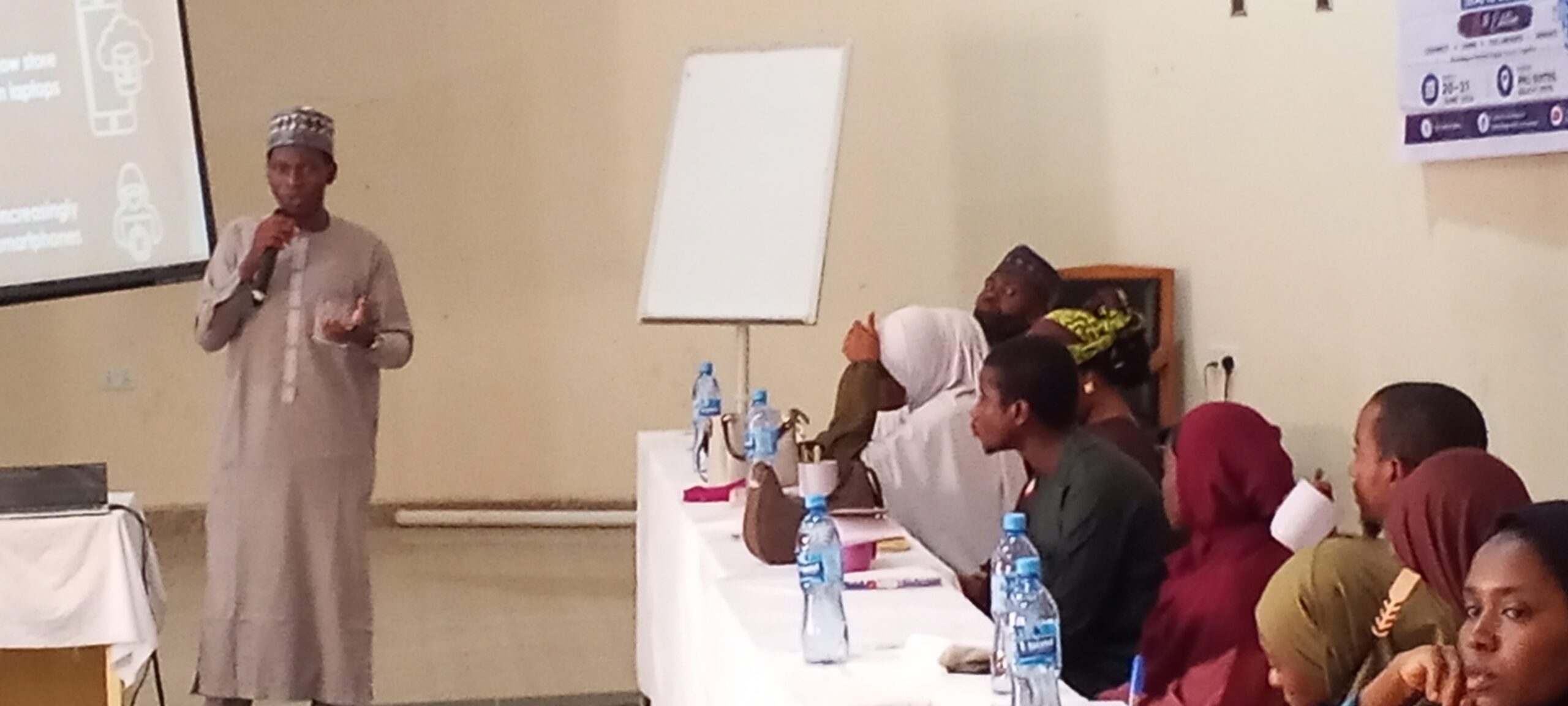
The Centre for Information Technology and Development (CITAD), through its Bauchi Feminist Internet School (BAFIS) 2026, has organised a two-day intensive training for 27 participants drawn from different states across Northern Nigeria to enhance digital literacy, online safety, digital rights awareness, and gender inclusion in the digital space.
Speaking during the training held at Pali Hotel, Bauchi, on Saturday, CITAD Executive Director, Mallam Yunusa Zakari Ya’u, represented by Ali Sabo, said the initiative was established to bridge the gender digital divide and empower women to actively participate in shaping the digital future.

According to him, BAFIS, which was first conceived in 2018 and has since become an annual programme, was designed to address the persistent exclusion of women from the digital ecosystem due to cultural and structural barriers.
“For too long, cultural and structural barriers have limited women’s access to the digital ecosystem. Today, we stand firmly together to challenge and dismantle the outdated notion that technology is a space reserved only for men,” he said.
Ya’u explained that the programme is built around three key objectives: producing digital inclusion champions, bridging the gender digital divide, and advancing internet governance and digital rights.

“Our goal goes beyond basic digital literacy. We are intentionally raising a new generation of tech leaders equipped to advocate for equal internet access and digital equity across Nigeria,” he stated.
He added that women must not only have access to digital technologies but also participate in shaping policies and legislative frameworks governing the internet.
“The internet is the modern frontier for governance, commerce, education and human rights. Excluding women from this space means excluding half of society’s intelligence, creativity and leadership,” he stressed.
Earlier, the Coordinator of Bauchi Feminist Internet School, Fatima Babba Kura, disclosed that 27 participants were shortlisted from a large pool of applicants across Northern Nigeria.

She said the programme attracted applicants from states including Kano, Plateau, Borno, Yobe, Kaduna and the Federal Capital Territory (FCT), Abuja.
“We received an overwhelming number of applications, including from people outside Bauchi State. This shows the growing interest in digital inclusion and internet governance issues,” she said.

Fatima explained that participants would receive certificates upon completion of the training and would be expected to transfer the knowledge gained to their respective communities.
“We deliberately included participants from rural communities because they are often the most excluded from digital opportunities. We believe that once equipped with this knowledge, they can return to their communities and help bridge the digital divide,” she added.
Some participants described the training as timely and impactful.
A participant from Kaduna State, Abubakar Yahuza Abubakar, an MSc student of Cybersecurity and Digital Forensics at the Nigerian Defence Academy, said the programme would deepen participants’ understanding of digital engagement and online safety.
“With increasing cybercrime and misinformation online, programmes like this are important in helping young people understand responsible digital engagement and the proper use of digital platforms,” he said.
Similarly, a serving corps member, Iro Oluchi Palema, said she joined the programme to broaden her knowledge of internet safety and build professional networks.
“The internet should be used for growth, innovation and positive impact, not for scams and harmful activities. This training is helping participants understand how to make meaningful contributions in the digital space,” she said.
Another participant, Amina Ishaq Ibrahim from Plateau State, described the training as enlightening, noting that online safety has become as important as physical security.
“A lot is happening online today, including scams and other digital threats. Training like this is essential because digital safety is no longer optional; it is a necessity,” she said.
The two-day training features sessions on digital rights, online safety, internet governance, digital inclusion, gender equality and strategies for addressing barriers that limit women’s participation in the digital space.


Taraba APC Crisis: Court Reserves Ruling on Suit Challenging Chairmanship Primary
By Andrew Ojih, Jalingo. The Federal High Court sitting in Jalingo, Taraba state Thursday reserved ruling in a suit seeking...


Governor Bala Congratulates New Bauchi NUJ Correspondents’ Chapel Leadership
From Paul Orude, Bauchi Bauchi State Governor, Senator Bala Abdulkadir Mohammed, has congratulated the newly elected leadership of the Correspondents’...


Oyewole Calls for Unity After Emergence as Bauchi Correspondents’ Chapel Chairman
From Paul Orude, Bauchi The newly elected Chairman of the Correspondents’ Chapel of the Nigeria Union of Journalists (NUJ), Bauchi...


Gadau Hails Bauchi State Correspondents’ Chapel for Credible Election
From Paul Orude, Bauchi The Chairman of the Nigerian Union of Journalists (NUJ), Bauchi State Council, Isah Garba Gadau, has...


APM Guber candidate launches N200 million bursary scheme for Bauchi Students
From Paul Orude Bauchi The governorship candidate of the Allied Peoples Movement (APM) in Bauchi State, Dr. Yakubu Adamu, has...


Nigeria at 66: Gov Bala Mohammed warns against ethnic, religious politics ahead of 2027
From Paul Orude Bauchi Bauchi State Governor, Senator Bala Mohammed, has cautioned politicians and other stakeholders against using ethnic, religious...


Bauchi Commissioner Urges Broadcasters to Tackle Misinformation
From Paul Orude Bauchi The Bauchi State Commissioner for Information and Communication, Usman Usman Shehu, has urged Nigerian broadcasters to...


Six NDC governorship candidates reject Babachir Lawal as North-East leader
From Paul Orude Bauchi Six governorship candidates of the Nigeria Democratic Congress (NDC) in the North-East have rejected the appointment...


Bauchi Begins Distribution of 4.8m Mosquito Nets to Protect 9.9m Residents
From Paul Orude Bauchi The Bauchi State Government has commenced the distribution of 4.8 million insecticide-treated mosquito nets (ITNs) to...


BRC MD Appreciates Bauchi Govt Over 163 Staff Regularisation, AM Transmitter
From Paul Orude, Bauchi The Managing Director of the Bauchi Radio Corporation (BRC), Malam Umar Mohammed Shira, has expressed appreciation...
-
News1 day ago
Oyewole Calls for Unity After Emergence as Bauchi Correspondents’ Chapel Chairman
-
News4 days ago
APM Guber candidate launches N200 million bursary scheme for Bauchi Students
-
News2 days ago
Gadau Hails Bauchi State Correspondents’ Chapel for Credible Election
-
News20 hours ago
Governor Bala Congratulates New Bauchi NUJ Correspondents’ Chapel Leadership
-

 Crime1 day ago
Insecurity: FG Security Agency Recovers over 22,000 Arms
-

 Business and Economy16 hours ago
NSE Commends Gov. Mohammed on Infrastructural Development
-
News10 hours ago
Taraba APC Crisis: Court Reserves Ruling on Suit Challenging Chairmanship Primary
-

 Crime10 hours ago
Insecurity: NCCSALW Destroys Over 17,000 Firearms