

Opinion
2027 Elections and the Journalist’s Role in Combating Misinformation


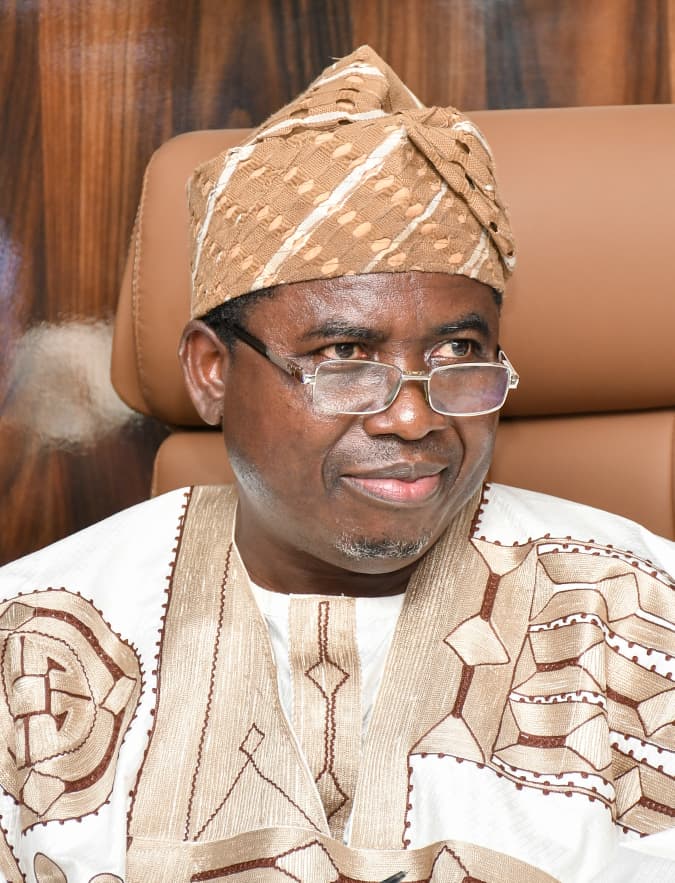
By Hikma Abdulkarim Lawan
As Nigeria moves towards the 2027 general elections, the country is entering another critical period in its democratic journey. Elections are not only contests for political power; they are also contests for information. The quality, accuracy and credibility of information available to citizens can significantly influence how they understand candidates, political parties, policies and the electoral process.
In this environment, journalists have a particularly important responsibility. They are expected not merely to report what politicians say, but to help citizens distinguish facts from falsehoods, verified information from rumours, and legitimate political debate from deliberate attempts to manipulate public opinion.
The challenge is becoming more complicated because information now travels faster than ever. Social media platforms such as Facebook, WhatsApp, X, TikTok and Instagram allow information to reach millions of people within minutes. Unfortunately, the same platforms that have democratised communication have also created fertile ground for misinformation, disinformation, hate speech, manipulated photographs, fabricated videos and artificial-intelligence-generated content.
UNESCO has warned that the information environment is increasingly complicated, with journalists and fact-checkers having to confront organised disinformation and emerging technologies such as deepfakes. It has also stressed the importance of collaboration between journalists, fact-checkers and digital content creators in rebuilding public trust.
Misinformation can have serious consequences during an election. A false report about a candidate, political party, electoral official or polling location can influence voters’ decisions. A fabricated announcement about postponement of an election could discourage citizens from going to the polls. A false claim that electoral materials have been diverted could create suspicion and tension.
Similarly, manipulated photographs and videos can be used to portray candidates as saying or doing things they never said or did. False election results can circulate before official results are announced, while inflammatory messages can exploit ethnic, religious, regional and political differences.
The danger is particularly acute because people tend to share information that confirms what they already believe. During politically charged periods, citizens may accept a sensational claim simply because it favours their preferred candidate or attacks an opponent.
This places journalists at the centre of the battle for information integrity.
One of the most important responsibilities of journalists during the 2027 elections will be to verify political claims before publishing them.
A politician’s statement should not automatically become a news story simply because it was made at a rally or press conference. Journalists must ask: Is the claim accurate? What evidence supports it? What do official records say? Can independent sources confirm it?
The traditional principles of journalism: accuracy, fairness, independence and accountability, will therefore become even more important.
Journalists should establish strong verification routines in their newsrooms. Before publishing photographs, reporters should establish where and when the image was taken. Videos should be checked for their original source and context. Statistics should be traced to their original documents. Statements attributed to public officials should be independently confirmed.
Where information cannot be verified, journalists should clearly say so rather than present speculation as fact.
Fact-checking should not be treated as an occasional activity reserved for specialised organisations. It should become part of everyday election reporting.
News organisations can establish dedicated fact-checking desks or assign reporters to monitor false claims circulating online. Journalists should also develop relationships with credible fact-checking organisations, researchers, election experts and technology specialists.
A particularly useful approach is “pre-bunking”, anticipating likely false narratives and providing audiences with accurate information before the falsehood gains momentum. UNESCO has highlighted pre-bunking and broader media literacy as important tools for strengthening public resilience against misinformation.
For example, if there are recurring rumours about voter registration, polling-unit locations, voting procedures or the announcement of results, journalists can publish explanatory reports addressing these issues before election day.
Journalists must resist political pressure
The fight against misinformation also requires journalists to maintain independence.
Nigeria’s political environment can be intensely partisan, and journalists may face pressure from politicians, political parties, supporters and even members of the public. Some may be encouraged to publish favourable information or suppress damaging reports about particular candidates.
The journalist’s primary loyalty, however, should be to the truth and the public interest.
A journalist must not become a campaigner for any political party or candidate. Even when reporting a claim made by a politician whom the journalist personally supports, the claim must receive the same level of scrutiny as a claim made by an opponent.
Fairness does not mean giving falsehoods equal weight with facts. It means giving relevant parties a fair opportunity to respond while ensuring that demonstrably false information is identified as such.
The challenge of artificial intelligence
The 2027 elections will also take place at a time when artificial intelligence is becoming increasingly accessible.
AI tools can produce convincing photographs, audio recordings and videos that appear authentic but are completely fabricated. A candidate’s voice can potentially be imitated. A fake video can be created to make it appear that a politician made a controversial statement.
Journalists therefore need stronger digital verification skills. They should not assume that a photograph or video is genuine simply because it looks convincing.
Newsrooms need continuous training in digital forensics, reverse-image searches, source verification, metadata analysis and other methods of identifying manipulated content.
UNESCO’s recent work on media and information literacy emphasises strengthening the capacity of journalists and media organisations to confront disinformation and build public trust.
Another major challenge will be misinformation circulating through closed platforms, particularly WhatsApp.
Unlike public social-media posts, WhatsApp messages can move rapidly through family groups, community associations, professional groups and political networks without obvious public accountability. A fabricated message can therefore reach thousands of people before journalists even become aware of it.
Journalists should monitor emerging narratives across different communities and social platforms while maintaining strict ethical standards. They should also encourage members of the public to send suspicious claims to newsrooms for verification.
Importantly, journalists should avoid unnecessarily amplifying false information. Reporting a rumour can sometimes give it greater visibility. Where a false claim must be addressed, the report should lead with the verified fact rather than sensationalising the falsehood.
Citizens, political parties, civil society organisations, technology companies, regulators, educators and digital content creators all have roles to play. UNESCO notes that building information resilience requires cooperation among journalists, fact-checkers and content creators rather than relying on journalists alone.
Journalists can contribute by teaching audiences how to verify information. Simple messages such as “check the source”, “check the date”, “look for independent confirmation” and “do not share information simply because it is emotionally appealing” can help citizens become more responsible consumers of information.
Political parties also have a responsibility to discourage their supporters from creating or circulating fabricated content about opponents.
Ultimately, the fight against misinformation is about more than protecting the reputation of individual politicians. It is about protecting democracy itself.
A democracy depends on citizens having access to reliable information upon which they can make informed choices. When falsehoods overwhelm facts, voters can be manipulated, public trust can collapse and political disagreements can become dangerous.
The 2027 elections will therefore test not only Nigeria’s electoral institutions but also the strength and professionalism of its media.
Journalists must rise to the occasion by putting verification before speed, facts before sensationalism and public interest before political pressure. They must embrace new digital tools without abandoning traditional journalistic ethics.
The journalist of 2027 cannot simply be a reporter who records what people say. He or she must also be a verifier, fact-checker, investigator, educator and trusted guide through an increasingly confusing information environment.
If journalists perform these responsibilities effectively, they can help ensure that Nigerians enter the 2027 elections better informed, less vulnerable to manipulation and more capable of making decisions based on facts rather than rumours.
In the final analysis, the battle against misinformation is a battle for the integrity of democracy—and journalists are among its most important defenders.


Bauchi Governor Approves Official Vehicles, Salary Review for Magistrates, Shari’a Court Judges
From Muazu Hardawa, Bauchi Bauchi State Governor, Senator Bala Abdulkadir Mohammed, has approved the provision of official vehicles for Magistrates...


NUC Approves 17 Postgraduate Programmes For North-Eastern University Gombe
By Najeeb Sani North-Eastern University (NEU) Gombe has secured approval from the National Universities Commission (NUC) to run 17 postgraduate...


Bauchi CP, NUJ Correspondents’ Chapel Pledge Stronger Partnership Ahead of 2027 Elections
CP Sani-Omolori Aliyu, mni, psc (+), with the Comrade Rauf Oyewole led leadership of the Correspondents’ Chapel during a courtesy...


NOA Partners Bauchi CSOs, Media Organisations for 2027 Elections Dialogue
From Paul Orude Bauchi The National Orientation Agency (NOA), Bauchi State Directorate, has entered into a strategic partnership with a...


APC Loyal Group Faults ADC Over Attack Allegation In Sokoto
By Najeeb Sani The Sokoto State APC Youth Vanguard for Good Governance, a group loyal to the All Progressives Congress...


48 Terrorists Killed as Troops Repel Attacks on Military Bases in Borno, Yobe
Our Editor Troops of the Nigerian military have killed 48 suspected Boko Haram and Islamic State West Africa Province (ISWAP)...


INEC Clears Pantami for 2027 Gombe Governorship Race, Pending Court Ruling
From David Omokuvie The Independent National Electoral Commission (INEC) has cleared former Minister of Communications and Digital Economy, Professor Isa...


2027: Six Political Parties Meet Eligibility for Bauchi People’s Mandate Dialogue
From Paul Orude Bauchi Six political parties have met the eligibility requirements to participate in the 2026 People’s Mandate Dialogue...


Mixed Reactions Trail Relocation of Taraba Poly to Suntai as Students, Management Threaten Protest
By Andrew Ojih, Jalingo The visit of Governor Agbu Kefas to Taraba State Polytechnic and his pronouncement that the institution...


Taraba Killings: Senate Demands Security Offensive in Taraba, Plateau, Bauchi as Death Toll Hits 80
Our Editor The Senate has called for intensified security operations in border communities across Taraba, Plateau and Bauchi states following...
-
News6 days ago
INEC Clears Pantami for 2027 Gombe Governorship Race, Pending Court Ruling
-
News6 days ago
2027: Six Political Parties Meet Eligibility for Bauchi People’s Mandate Dialogue
-
News6 days ago
48 Terrorists Killed as Troops Repel Attacks on Military Bases in Borno, Yobe
-

 Politics6 days ago
Goje, Dankwambo Absent as Gombe APC Inaugurates 666-Member Campaign Councils
-
News4 days ago
NOA Partners Bauchi CSOs, Media Organisations for 2027 Elections Dialogue
-

 Crime6 days ago
Police Arrest Fake Soldier Over Alleged Theft of Employer’s Vehicle in Bauchi
-

 Crime4 days ago
Bauchi: Police Arrest Five Suspects Over Alleged Defilement of Minors in Zaki, Azare
-
News4 days ago
APC Loyal Group Faults ADC Over Attack Allegation In Sokoto