
News
FG Halts Creation of New Tertiary Institutions for 7 Years

From Ufuoma Omojirhe
The Federal Government has announced a seven-year freeze on the establishment of new federal universities, polytechnics, and colleges of education.
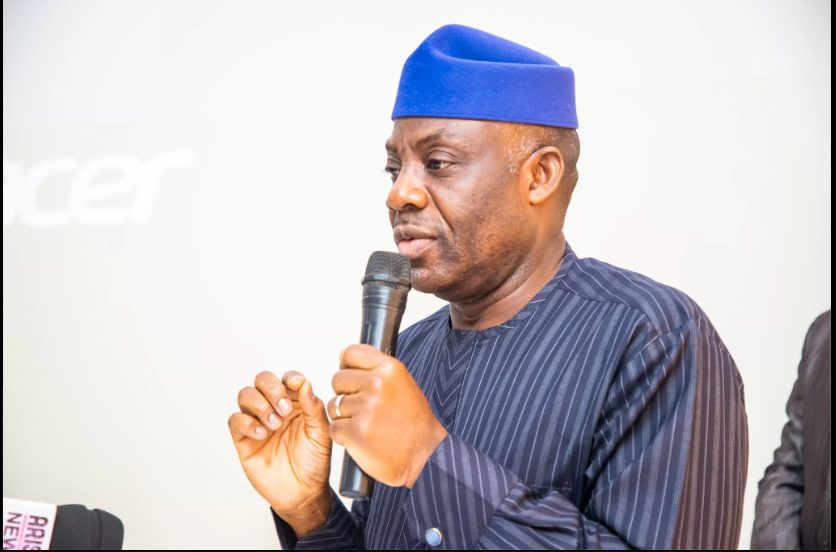
The policy was approved on Wednesday at the Federal Executive Council (FEC) meeting chaired by President Bola Tinubu at the Presidential Villa, Abuja, following a presentation by the Minister of Education, Dr. Tunji Alausa.
The move is to address what it described as the “wasteful proliferation” of under-utilised institutions, dwindling resources, and declining academic standards.
Despite the freeze, FEC cleared the establishment of nine private universities, which Alausa said had been pending for up to six years and had passed rigorous evaluation by the National Universities Commission (NUC).
> “The problem is no longer access, but duplication of institutions, inadequate infrastructure, poor staffing, and very low student enrolment in many schools,” the minister told State House correspondents.
Statistics presented by the ministry painted a troubling picture:
Some federal universities operate below capacity, with fewer than 2,000 students enrolled.
One northern university reportedly has 1,200 staff for fewer than 800 students.
Last year, 199 universities received fewer than 100 applications via the Joint Admissions and Matriculation Board (JAMB), while 34 got none.
Many polytechnics and colleges of education recorded fewer than 99 applicants, with some receiving zero applications.
Alausa warned that if the situation persisted, Nigeria risked producing poorly trained graduates, devaluing its degrees internationally, and aggravating unemployment.
He explained that the moratorium — which also applies to private polytechnics and colleges of education — would allow the government to focus on upgrading existing facilities, employing qualified lecturers, and expanding the capacity of current institutions.
Nigeria currently has 72 federal universities, 42 federal polytechnics, and 28 federal colleges of education, in addition to hundreds of state-owned and private tertiary schools, as well as specialised institutions in agriculture, health, and nursing.
The minister hailed the policy as a “reset button” for the nation’s higher education sector, adding:
> “Mr. President is committed to quality education and has given us the mandate to ensure every Nigerian student receives training that matches global standards.”


Taraba APC Crisis: Court Reserves Ruling on Suit Challenging Chairmanship Primary
By Andrew Ojih, Jalingo. The Federal High Court sitting in Jalingo, Taraba state Thursday reserved ruling in a suit seeking...


Governor Bala Congratulates New Bauchi NUJ Correspondents’ Chapel Leadership
From Paul Orude, Bauchi Bauchi State Governor, Senator Bala Abdulkadir Mohammed, has congratulated the newly elected leadership of the Correspondents’...


Oyewole Calls for Unity After Emergence as Bauchi Correspondents’ Chapel Chairman
From Paul Orude, Bauchi The newly elected Chairman of the Correspondents’ Chapel of the Nigeria Union of Journalists (NUJ), Bauchi...


Gadau Hails Bauchi State Correspondents’ Chapel for Credible Election
From Paul Orude, Bauchi The Chairman of the Nigerian Union of Journalists (NUJ), Bauchi State Council, Isah Garba Gadau, has...


APM Guber candidate launches N200 million bursary scheme for Bauchi Students
From Paul Orude Bauchi The governorship candidate of the Allied Peoples Movement (APM) in Bauchi State, Dr. Yakubu Adamu, has...


Nigeria at 66: Gov Bala Mohammed warns against ethnic, religious politics ahead of 2027
From Paul Orude Bauchi Bauchi State Governor, Senator Bala Mohammed, has cautioned politicians and other stakeholders against using ethnic, religious...


Bauchi Commissioner Urges Broadcasters to Tackle Misinformation
From Paul Orude Bauchi The Bauchi State Commissioner for Information and Communication, Usman Usman Shehu, has urged Nigerian broadcasters to...


Six NDC governorship candidates reject Babachir Lawal as North-East leader
From Paul Orude Bauchi Six governorship candidates of the Nigeria Democratic Congress (NDC) in the North-East have rejected the appointment...


Bauchi Begins Distribution of 4.8m Mosquito Nets to Protect 9.9m Residents
From Paul Orude Bauchi The Bauchi State Government has commenced the distribution of 4.8 million insecticide-treated mosquito nets (ITNs) to...


BRC MD Appreciates Bauchi Govt Over 163 Staff Regularisation, AM Transmitter
From Paul Orude, Bauchi The Managing Director of the Bauchi Radio Corporation (BRC), Malam Umar Mohammed Shira, has expressed appreciation...
-
News2 days ago
Oyewole Calls for Unity After Emergence as Bauchi Correspondents’ Chapel Chairman
-
News4 days ago
APM Guber candidate launches N200 million bursary scheme for Bauchi Students
-
News2 days ago
Gadau Hails Bauchi State Correspondents’ Chapel for Credible Election
-
News1 day ago
Governor Bala Congratulates New Bauchi NUJ Correspondents’ Chapel Leadership
-

 Crime2 days ago
Insecurity: FG Security Agency Recovers over 22,000 Arms
-

 Business and Economy1 day ago
NSE Commends Gov. Mohammed on Infrastructural Development
-

 Crime1 day ago
Insecurity: NCCSALW Destroys Over 17,000 Firearms
-
News1 day ago
Taraba APC Crisis: Court Reserves Ruling on Suit Challenging Chairmanship Primary