

News
Yobe Moves Beyond IDP Camps, Faces Funding Hurdles in Resettlement Drive


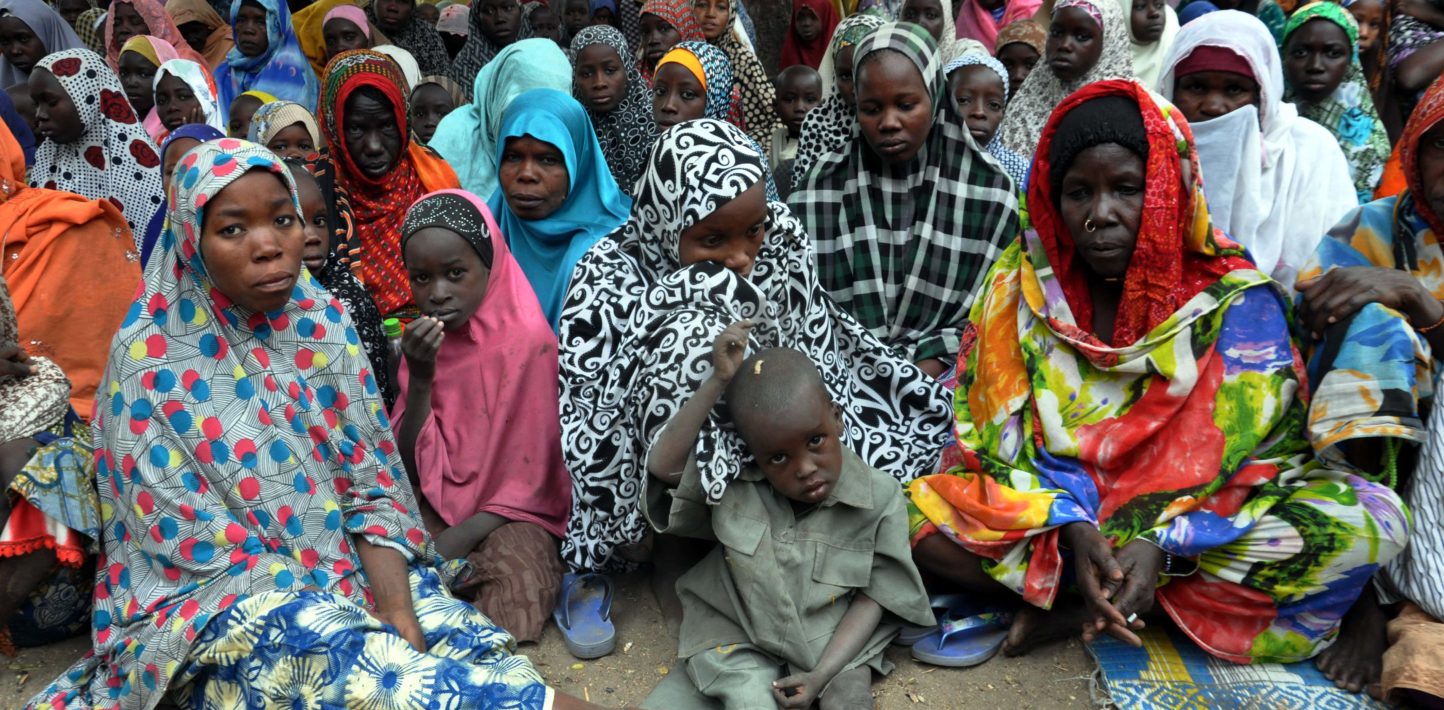
Despite security improvements, internally displaced persons (IDPs) in Yobe State are still struggling with limited access to means of survival
of survival, the Executive Secretary of the Yobe State Emergency Management Agency (SEMA) Mohammed Gone, has said.
Speaking on Channels Television’s The Morning Brief on Wednesday, Goje acknowledged the humanitarian concerns but maintained that the state’s approach had transitioned from temporary camps to more “durable and realistic” solutions.
“In Yobe State, the context is entirely different. We have already moved from IDPs in camps to a more realistic and durable solution,” he said.
Speaking on Channels Television’s The Morning Brief on Wednesday, Goje acknowledged the humanitarian concerns but maintained that the state’s approach had transitioned from temporary camps to more “durable and realistic” solutions.
“In Yobe State, the context is entirely different. We have already moved from IDPs in camps to a more realistic and durable solution,” he said.
According to him, most IDPs in the state had been resettled, except for those from Mandunari town — a community still undergoing reconstruction.
He explained that the government was rebuilding critical infrastructure in Mandunari, including housing, healthcare, education, water, and security facilities, to enable the safe and sustainable return of its residents.
Goje admitted that although security had improved across the state, significant challenges remained — particularly due to funding constraints and declining international support.
“Even though there have been tremendous improvements, because of the funding constraints — funding we do not partake — and other development challenges, the return of IDPs comes with a larger burden to the government.
“And when I say the government, I mean in terms of resettlement, in terms of giving them their livelihood, and in terms of returning them to their ancestral threats and businesses. These are a huge challenge to the government,” he stated.
He noted that Yobe’s displacement issues were especially complex because many of the affected people come from rural and nomadic “horse communities,” which required tailored reintegration plans and livelihood support.
To address these challenges, Goje said the government was using a three-pathway strategy for IDP resettlement: return, integration, or relocation — each backed by a specific support package.
These include housing for returnees, assistance for host communities, and development projects to strengthen basic services.
He also disclosed that a comprehensive state-level IDP policy has been developed, focusing on closing sectoral gaps in health, water, environment, and education.
“We have revealed the gap accompanied by the challenge — especially with the withdrawal of US aid — and we have defined our gaps based on health, water, environment, and education, all in order to see how the government can fix and close the gap,” he added.
THE. STREET JOURNAL


Bala Mohammed Vows Not to Abandon PDP, Calls for Unity to Rebuild Party
From Paul Orude Bauchi Governor of Bauchi State, Senator Bala Abdulkadir Mohammed, has reaffirmed his unwavering commitment to the Peoples...


Group Demands Evidence as Yuguda Accuses Foreign Minister of Bribery
From Paul Orude Bauchi A political group, Tuggar Vanguard, has reacted strongly to allegations made by former Bauchi State Governor,...


Eid-el-Fitr: Christian Council of Nigeria Extends Greetings to Muslims
… Commends Gov Bala Mohammed for Inclusive governance From Paul Orude Bauchi The Christian Council of Nigeria (CCN), Bauchi State...
Eid el-Fitr: Gov Bala Mohammed Felicitates With Muslims, Urges Unity and Vigilance
Gov Bala Mohammed From Paul Orude, Bauchi Governor of Bauchi State, Sen. Bala Abdulkadir Mohammed, has extended warm felicitations to...


Eid el-Fitr: CMD Orthopedic Urges Muslim Ummah To Embrace, Promote Principles That Unite All Faith
By Andrew Ojih, Jalingo. The Chief Medical Director of the National Orthopedic Hospital Jalingo, Professor Chubadu Tahir on Friday urged...


UNICEF, Federal Government Task Journalists On Child Rights Reporting
By Najib Sani, Gombe The Federal Government, in collaboration with the United Nations Children’s Fund (UNICEF), has emphasised the importance...


Defection Buzz: “I’m Now a Global Personality,” Says Bala Mohammed
From Paul Orude, Bauchi Amid growing speculation over a possible defection to the ruling All Progressives Congress (APC), Bauchi State...


Bauchi Governor Swears In 17 Permanent Secretaries, Warns Against Corruption
From Paul Orude, Bauchi Governor of Bauchi State, Bala Mohammed, on Wednesday swore in 17 newly appointed Permanent Secretaries, warning...


NANS Condemns Maiduguri Suicide bombings, Tasks FG on Students Safety
By Najib Sani, Gombe The National Association of Nigerian Students (NANS) has condemned the suicide bomb attacks that rocked Maiduguri,...


Sultan of Sokoto Calls on Muslims to Spot Shawwal Crescent Moon
Our Editor The Sultan of Sokoto, Muhammad Sa’ad Abubakar, has urged Muslims across Nigeria to begin searching for the crescent...
-

 Education6 days ago
ASUU FUGA Chairman Urges Academics to Invest in NUPEMCO Recapitalisation
-

 Opinion4 days ago
Bala Wunti Is Not Guilty of Corruption- Barr. Isa Hamza Yashi
-

 Education7 days ago
FUGA VC Unveils Reforms to Produce Highly Employable Graduates
-

 News6 days ago
2027: Kaura Force Movement Launched to Defend Governor Bala Mohammed
-

 Education5 days ago
Gov. Kefas Takes Over Payment of Gratuities, Pensions for Taraba University Staff
-

 Health7 days ago
Bauchi Govt, UNICEF Unite Against Child Malnutrition With N600m Intervention
-
News4 days ago
Defection Buzz: “I’m Now a Global Personality,” Says Bala Mohammed
-

 News6 days ago
Taraba Govt Releases N500 million to Varsity, Urges ASUU to Call Off Strike
