

Opinion
Kebbi Mega Rally: When Masses Tell Their Story


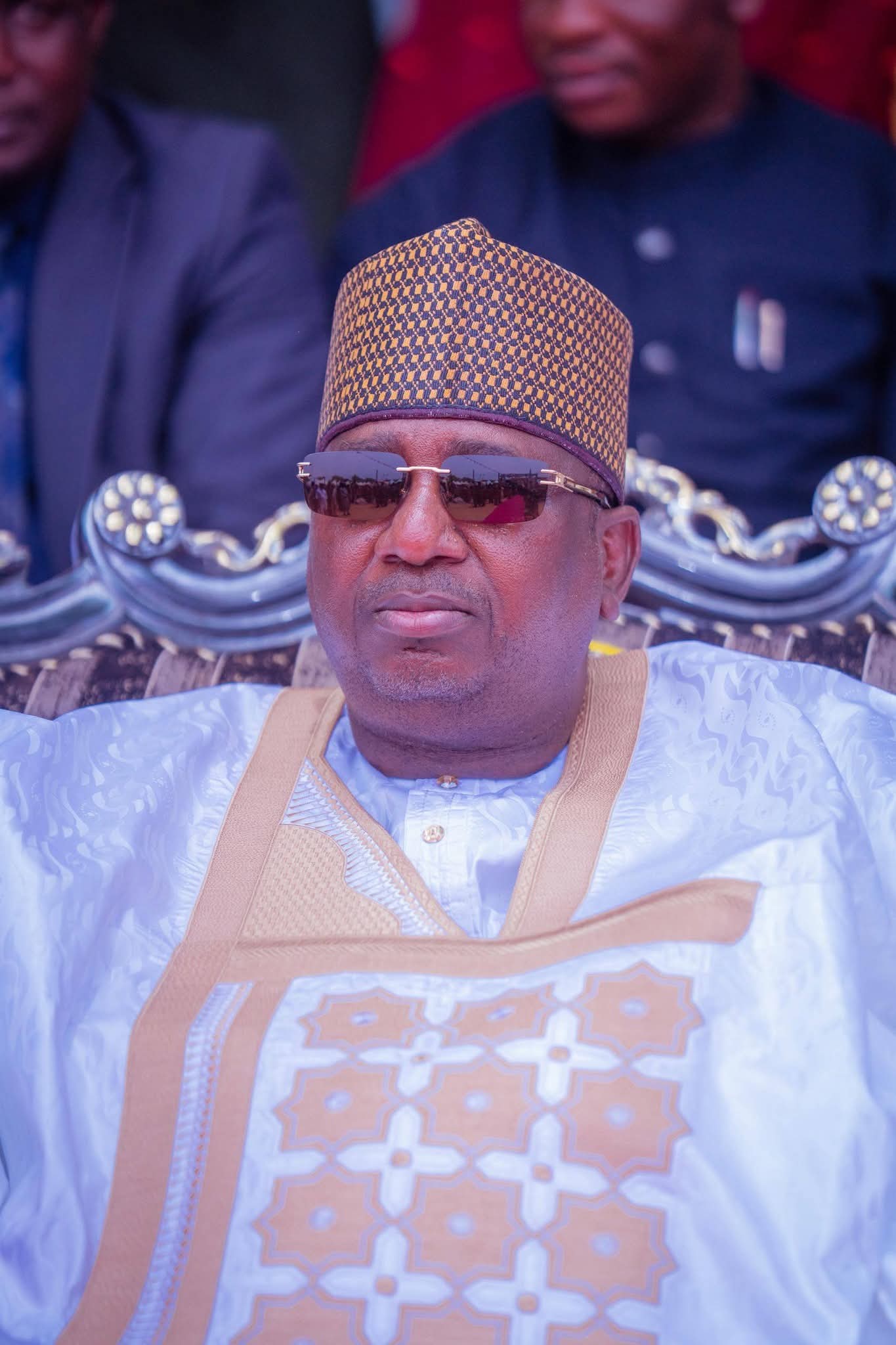
By Ibrahim Bello
Politics, by its very nature, is a contest of narratives. The opposition thrives on casting doubt, often working overtime to diminish incumbency with sharp rhetoric and selective amnesia. But while, so many incumbents allow themselves to be distracted or drawn into street brawls by the natural antics of the opposition, some simply just show the opposition what it truly means to be accepted. This they do through the people who, having experienced governance, decide to take up the job of marketing the incumbent through organic public spectacles.
That moment played out in Birnin Kebbi, over the weekend when an overwhelming crowd of Kebbi people surged in solidarity with Governor Nasir Idris, (Kauran Gwandu), and President Bola Ahmed Tinubu. All those who witnessed that organic crowd noted that it was not just another rally; it was a referendum of sorts, staged not in ballot boxes, but in human numbers.
When people gather in such magnitude, uncoerced and spirited, they are not merely attending an event; they are testifying to what they have witnessed.
The chants were unmistakable. The placards told their own stories—roads completed, schools revived, hospitals upgraded, salaries paid, security strengthened. It was less of political theatre and more of a public audit, carried out by those who feel the impact most directly.
For Governor Nasir Idris, the significance of that moment goes beyond optics. It reflects a governance model that has deliberately focused on tangible outcomes rather than loud proclamations. Since assuming office in 2023, his administration has carved a reputation around visible development and administrative responsiveness.
Take infrastructure, for instance. Across Kebbi State, there has been a steady push to rehabilitate and construct roads linking communities that were previously cut off, especially during the rainy season. Roads such as the Argungu–Aleiro corridor and critical township roads within Birnin Kebbi have improved mobility, eased trade, and reduced travel time for residents and farmers alike. These are economic lifelines whose impact is already being felt.
In education, the primary constituency of the governor, the story is equally compelling. Governor Nasir has prioritised the renovation of dilapidated schools and the construction of new classrooms to address overcrowding. Beyond infrastructure, his administration approved the recruitment of thousands of teachers to bridge staffing gaps in public schools. This intervention is critical in a state where access to quality basic education remains a developmental challenge. By investing in both human and physical capital, Kebbi is gradually repositioning its education sector for long-term gains.
Healthcare delivery, often neglected in subnational governance, has also received notable attention. Several primary healthcare centres have been upgraded and equipped across the state, improving access to basic medical services in rural areas.
The administration has also supported general hospitals with essential equipment and personnel, strengthening the referral system. Perhaps, the most significant investment in this sector is the establishment of the Kebbi College of Nursing and Midwifery, Ambursa. The idea is to create a ready source for critical health workers to man the revamped hospitals.
Perhaps one of the most defining aspects of Governor Nasir’s leadership has been his approach to workers’ welfare.
As a former union leader, expectations were naturally high, and he has not disappointed. His administration moved early to implement the new national minimum wage, placing Kebbi among the states that acted swiftly in that regard.
Salaries have been paid consistently, pensions cleared, and gratuities addressed in a manner that restores dignity to retired civil servants.
With stories of struggling senior citizens across the country, Gov. Nasir’s commitment to doing right by retirees stands out indeed.
Security, though largely under federal control, has not been ignored. Kebbi has witnessed improved coordination between state authorities, the home grown security outfits and security agencies, particularly in border communities prone to banditry.
The government has supported logistics, mobility, and community engagement initiatives that contribute to maintaining relative peace. While challenges persist, the effort to proactively address them is evident.
Agriculture, the backbone of Kebbi’s economy, has also benefited from targeted interventions. The administration has supported farmers with inputs, improved seedlings, and extension services aimed at boosting productivity.
Given Kebbi’s status as a leading rice-producing state, these efforts are not just about food security, they are about economic stability and rural livelihoods.
What makes these interventions particularly significant is the broader fiscal context. Many governors have acknowledged that reforms initiated by President Bola Ahmed Tinubu, especially around revenue and subsidy restructuring have increased allocations to states.
The real test, however, lies in utilisation. In Kebbi, there is a growing perception that these resources are being translated into visible development.
This is where the opposition’s narrative buckles under the weight of street level evidence and the lived reality of the people. Granted that criticism remains a vital component of democracy, but it must contend with evidence.
When roads are seen, when salaries are paid, when schools are functioning, and when hospitals are accessible, rhetoric alone cannot easily erase lived experience.
It’s no wonder then that the poster boy of Kebbi opposition, Abubakar Malami, was recently treated to a befitting welcome to Kebbi when youths lined the streets to chant “barawo bai mulki” loosely translated to mean thieves don’t govern.
The Birnin Kebbi rally, therefore, was not just about political endorsement; it was about validation. It demonstrated that governance, when rooted in delivery, builds its own constituency, one that is not easily swayed by transient political arguments.
Of course, no administration is without its shortcomings. There are still areas requiring urgent attention. Such areas as youth unemployment, deeper industrialisation, and expanded healthcare coverage, among others can be made better. Yet, the measure of leadership is not perfection; it is direction. And in Kebbi, the direction appears increasingly clear.
As 2027 gradually enters the political horizon, conversations will intensify. Alliances will shift, narratives will be refined, and ambitions will be declared. Yet, beneath all that, one fundamental question will persist: what has been done?
In answering that question, Governor Nasir Idris may not need an elaborate defence. The roads will speak; the schools will testify and the workers will remember. And, as witnessed in Birnin Kebbi, the people will gather, again, if necessary, to make their voices heard.
Because in the end, beyond party lines and political calculations, governance finds its truest expression in impact. And when impact resonates deeply enough, it does something no campaign strategy can manufacture; it draws a crowd that speaks not from gated mansions, but from the overall experience of governance as promised by a leader both unionist and welfarist.
Bello writes from Birnin Kebbi


Bauchi Coalition Targets 10,000 Volunteers for Halliru Jika’s 2027 Guber Bid
From Paul Orude Bauchi The Coalition of Concerned People of Bauchi State has announced plans to mobilise about 10,000 volunteers...


Mining Pit Collapse Claims Over 20 Lives in Taraba
By Andrew Ojih, Jalingo No fewer than 20 people, including women and children, were feared dead on Thursday after a...


Bauchi NUJ Election: Ahmed Mohammed Promises Transparent Leadership
From Paul Orude Bauchi Chairmanship candidate of the Nigerian Union of Journalists (NUJ), Bauchi State Council in the September 19...


Gadau Seeks Correspondents’ Chapel Support, Promises to Consolidate NUJ Gains
From Paul Orude Bauchi Chairmanship candidate in the forthcoming Nigeria Union of Journalists (NUJ), Bauchi State Council election, Isa Gadau,...


Banditry Allegations: I’m Ready for Prosecution, Senator Buba challenges security agencies
From Paul Orude Bauchi Senator Shehu Buba Umar, representing Bauchi South Senatorial District, has challenged security agencies to investigate allegations...


Governor Bala Mohammed Mourns Bamanga Tukur, Hails His Contributions to Nigeria
From Paul Orude Bauchi Bauchi State Governor, Senator Bala Abdulkadir Mohammed, has expressed deep sorrow over the death of elder...


Gombe 2027: Tinka Receives APC Chieftain Babawo Dukku Into ADC
By Najeeb Sani A chieftain of the All Progressives Congress (APC) in Gombe State and former House of Representatives aspirant...


Former Gombe PDP women leader, Ex-commissioner, others defect to APC
The All Progressives Congress (APC) in Gombe State has received prominent stalwarts of the Peoples Democratic Party (PDP) who defected...


Group demands release of Badejo, says DSS must respect court bail
From Paul Orude Bauchi The Association of Kautal Fulaku Waila Harmony and Outreach for Rapid Development has called for the...


Governor Bala Mohammed Mourns Government House Cameraman, Abdullahi Sule
From Paul Orude, Bauchi Bauchi State Governor, Senator Bala Abdulkadir Mohammed, has expressed deep sorrow over the death of Malam...
-
News4 days ago
Gadau Seeks Correspondents’ Chapel Support, Promises to Consolidate NUJ Gains
-
News7 days ago
Group demands release of Badejo, says DSS must respect court bail
-

 Crime6 days ago
‘Fake Okada’ Rider: 35 Women Allegedly Kidnapped in Bauchi
-

 Education6 days ago
Taraba State University Graduates 17, 759 Students In Combined Convocation
-
News2 days ago
Bauchi NUJ Election: Ahmed Mohammed Promises Transparent Leadership
-
News5 days ago
Governor Bala Mohammed Mourns Bamanga Tukur, Hails His Contributions to Nigeria
-
News5 days ago
Banditry Allegations: I’m Ready for Prosecution, Senator Buba challenges security agencies
-
News6 days ago
Former Gombe PDP women leader, Ex-commissioner, others defect to APC