

News
Danmaliki Faults New Language Policy, Says Nigeria Taking “Step Backward for Education, Identity”


From Paul Orude, Bauchi
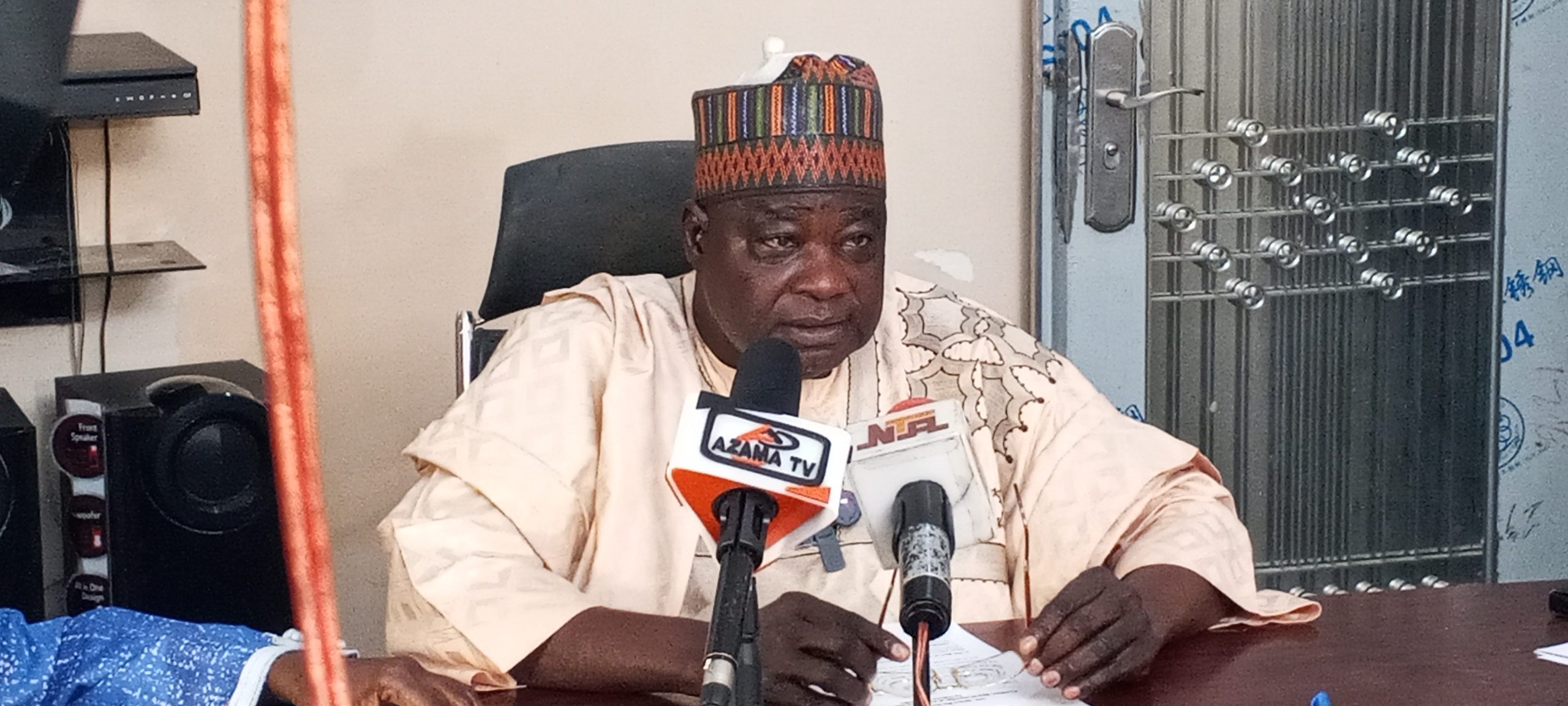
President of the Bauchi Chamber of Commerce, Industry, Mines and Agriculture (BACCIMA), Hon. Aminu Mohammed Danmaliki, has described Nigeria’s newly announced language policy as “a step backward for education, culture, and national identity,” calling for its immediate review.
Danmaliki stated this on Tuesday during an advocacy press conference in Bauchi, where he warned that the policy, which appears to place English above indigenous languages in foundational education, threatens the future of Nigerian children and undermines decades of cultural progress.
Addressing journalists, Danmaliki said the policy contradicts Nigeria’s commitments to UNESCO conventions and ignores established global research that affirms the importance of mother-tongue instruction in early education.
“A people that abandons its language is abandoning its history, its worldview, its cultural memory and its sense of belonging,” he said.
He noted that a recent editorial by The Trumpeter newspaper rightly labelled the policy as “A Step Backward for Education and Identity,” adding that the Federal Government risks deepening educational inequality with such a shift.
The BACCIMA President reminded Nigerians that the Federal Government already maintains agencies saddled with promoting local languages, including, National Institute for Nigerian Languages (NINLAN), Aba – Nigeria’s only specialized institution for teaching and preserving indigenous languages.
Others he disclosed, are Nigerian Educational Research and Development Council (NERDC) responsible for curriculum development and production of teaching materialsational Council for Arts and Culture (NCAC) and National Broadcasting Agencies that promote mother-tongue programming.
He said any policy sidelining indigenous languages renders these institutions ineffective and weakens the cultural foundation of the nation.
Danmaliki stressed that unlike Africa, countries across Asia, Europe, the Middle East, and Latin America rely overwhelmingly on their native languages as instructional media.
“No Asian or European country uses a foreign colonial language as the foundation of its education system,” he said.
He pointed out that Africa remains the only continent where colonial languages continue to dominate education, describing it as “a historical distortion” that undermines development.
Citing UNESCO and World Bank research, Danmaliki noted that children learn faster, develop stronger literacy, and stay longer in school when taught in a language they understand.
He warned that an English-dominant policy could lead to poor comprehension of basic concepts, lower academic performance, higher dropout rates, erosion of indigenous cultures and increasing inequality between rural and urban learners.
“Making English the exclusive medium of early education is both pedagogically unsound and socio-culturally harmful,” he said.
The BACCIMA President recommended that Nigeria adopt a balanced model used in countries like Ethiopia, Tanzania and Finland, where children begin learning in their mother tongue before transitioning gradually to bilingual or English-dominant education.
He urged the Federal Government to strengthen mother-tongue instruction in early classes, train more language teachers through NINLAN and digitise Nigerian languages and make them AI-compatible.
He also urged the Federal Government to expand regional language broadcasting, support local-language publishing and protect minority languages from extinction.
Danmaliki called on the Ministry of Education, NINLAN, NERDC, state education boards, traditional rulers, civil society and the media to intervene and ensure that Nigeria’s linguistic heritage is safeguarded.
“Nigeria’s indigenous languages are not obstacles. They are resources and pillars of identity. We must resist any policy that weakens our cultural foundation,” he said.
Quoting celebrated Kenyan writer Ngũgĩ wa Thiong’o, Danmaliki concluded that failing to protect local languages risks cultural extinction.
“To starve a child of their mother tongue is to starve their soul,” he said.
He therefore called for urgent reassessment of the language policy “in the interest of national unity, social justice, and the future of Nigerian children.”


Crisis Hits Bauchi APM as Faction Suspends Chairman Auwal Isah
From Paul Orude, Bauchi A crisis has hit the Allied Peoples Movement (APM) in Bauchi State, as the party’s secretary...


2027: Bauchi APM Sues INEC, PRP, Shehu Buba Over PRP Governorship Candidacy Eligibility
From Paul Orude, Bauchi The Allied Peoples Movement (APM) has filed a suit at the Federal High Court, Bauchi, challenging...


Minorities Hold No Key Office in Toro Despite 60% Population – 48 Groups Cry Out
From Paul Orude, Bauchi The Chairman of the Conference of Autochthonous Ethnic Nationalities Community Development Associations (CONAECDA), Bauchi State chapter,...


FUHSA Beat Peer Health Universities to Maiden Convocation – Chancellor
…..graduates 50 pioneer students. From Paul Orude Bauchi The Federal University of Health Sciences, Azare (FUHSA) has become the first...


“People Laughed at Me When I Was Recording Rogon Baban Doya – Today It’s a Hit”: How Salmanu Kaura Rose from Hunger to Stardom
Salmani Aminu Ahmad, popularly known as Salmanu Kaura, whose song Rogon Baban Doya has become a campaign anthem for the...
“People Laughed at Me When I Was Recording Rogon Baban Doya – Today It’s a Hit”: How Salmanu Kaura Rose from Hunger to Stardom
From Paul Orude, Bauchi Salmani Aminu Ahmad, popularly known as Salmanu Kaura, is famed for waxing the single Rogon Baban...


Woman Seeks Justice After 10-Year-Old Daughter Allegedly Defiled by Foodstuff Seller in Bauchi
Police confirm arrests in three separate defilement cases involving girls aged 9, 10, and 11. From Paul Orude, Bauchi Zainab...


PCN Seals 722 Medicine Premises in Bauchi, Recovers Tramadol, Rohypnol, Codeine Syrups
From Paul Orude Bauchi The Pharmacy Council of Nigeria (PCN) has sealed 722 of the 950-medicine premises it inspected in...


Governor Mohammed Hails Tinubu Over New Battalions in Alkaleri, Tafawa Balewa
From Paul Orude, Bauchi Bauchi State Governor, Senator Bala Mohammed, has expressed appreciation to President Bola Ahmed Tinubu and the...


Bauchi Police Arrest Suspect for Allegedly Poisoning, Attempting to Rob Motorcyclist
The Bauchi State Police Command has arrested a man for allegedly conspiring to poison and rob a commercial motorcyclist of...
-
News6 days ago
“People Laughed at Me When I Was Recording Rogon Baban Doya – Today It’s a Hit”: How Salmanu Kaura Rose from Hunger to Stardom
-
News4 days ago
Minorities Hold No Key Office in Toro Despite 60% Population – 48 Groups Cry Out
-
News4 days ago
FUHSA Beat Peer Health Universities to Maiden Convocation – Chancellor
-
News6 days ago
“People Laughed at Me When I Was Recording Rogon Baban Doya – Today It’s a Hit”: How Salmanu Kaura Rose from Hunger to Stardom
-
News6 days ago
Governor Mohammed Hails Tinubu Over New Battalions in Alkaleri, Tafawa Balewa
-
News6 days ago
Bauchi Police Arrest Suspect for Allegedly Poisoning, Attempting to Rob Motorcyclist
-
News6 days ago
PCN Seals 722 Medicine Premises in Bauchi, Recovers Tramadol, Rohypnol, Codeine Syrups
-
 Health6 days ago
Katsina: MSF Treats Over 87,000 Children for Acute Malnutrition in Eight Months